Products made from tiger nuts and their uses
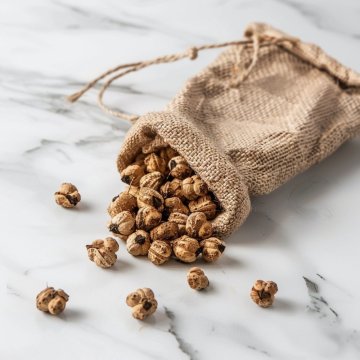
Tiger Nut, as an inconspicuous tuber, has been used for thousands of years, but its exceptional properties and benefits are only now gaining attention. Products made from tiger nut, such as the drink horchata, flour, or oil, offer not only excellent taste but also numerous health benefits.
Primary and secondary products from tiger nut have become increasingly interesting to today’s bio-ecological society. Whether it’s their composition, positive health effects, or overall use, tiger nut products are slowly but surely gaining more recognition.
The most well-known food product from this crop is the drink "horchata de chufa," or tiger nut milk. However, it also has other uses. It is used as a flavoring in ice cream, as flour added to cookies or other baked goods, or as a component in the production of oil and soap.
As is often the case, tiger nut has found its use worldwide. For example, in Nigeria, it is used to prepare a non-alcoholic drink called “kunnu,” which is primarily made from cereals, spices, and sugar. In Ghana, it is a popular treat, where it is consumed raw or crushed, in the form of paste or porridge.
Horchata
As previously mentioned, "horchata de chufa" is a sweet drink made from tiger nut tubers, which has gained fame in Spain, particularly in the Valencia region. This non-alcoholic drink, with a milky texture, is made not only from tiger nut tubers but also from sugar and water. Its production involves soaking the nuts for 8 hours, grinding, pressing, and mixing with sugar (100 to 120 g/l). This is the method by which approximately 40 to 50 million liters of horchata are produced annually in Spain, with a retail value of around 60 million euros.
Natural "horchata" has a pH between 6.3 and 6.8 and a high starch content, so it should not be heated above 72 °C to avoid thickening and changes in taste. In addition to its high nutritional value, the drink also has significant market potential, although its short shelf life limits its widespread use.
In terms of its nutritional value, "horchata" helps with health problems such as bloating, digestive issues, diarrhea, and dysentery (inflammatory bowel disease). Its high content of essential amino acids and unsaturated fatty acids helps prevent heart problems and improves circulation.
The advantage is that the drink, due to its low glycemic carbohydrates that only slightly increase blood sugar levels, is suitable for diabetics. It is also suitable for people with celiac disease and lactose intolerance, as it contains digestive enzymes that assist with digestive problems.
By-products from Horchata
During the production of "horchata," up to 60% of by-products are generated, which have traditionally been used for composting or as animal feed. New research, however, suggests that the residual paste from "horchata" production, known as "torta," can easily be separated into two reusable components—solid and liquid—by pressing or filtering.
Utilization of the Solid Component of the By-product
During tiger nut milk processing, approximately 47% of the solid residue is made up of fiber known as TNF. This fiber is known for its ability to absorb water, which helps fill the stomach and increase the feeling of satiety. Adequate fiber intake has numerous health benefits, including reducing the risk of heart disease, stroke, hypertension, diabetes, obesity, and some digestive issues. It also improves lipid levels in the blood, regulates blood pressure, promotes regular bowel movements, aids weight loss, and can enhance immune function.
To demonstrate the reusability of TNF, an experiment was conducted by adding it to hamburgers. The results showed that the burgers were significantly enriched with fiber content. However, the changes also affected the structure and juiciness of the burgers, although their overall acceptability among the public was not significantly impacted.
Utilization of the Liquid Component of the By-product
On the other hand, the solid component is complemented by a liquid edible by-product (TNLC), which constitutes 53% of the residue. This liquid is 94.44% water and contains carbohydrates, proteins, lipids, ash, and various acids such as lactic acid, citric acid, and malic acid. Despite the presence of these acids, the liquid has almost neutral pH, meaning it does not alter the pH of the food it is added to. Apart from the suitable pH value, TNLC is promising as a food ingredient due to its high antioxidant activity. Its disadvantage is its high microbial load, which requires pasteurization before it can be added to foods.
Similar to the solid component, researchers also tested the effect of adding TNLC to pork hamburgers. This variant of the experiment was even more successful due to better cooking properties and improved texture of the resulting meat. The results confirmed the use of TNLC as a valuable alternative to water in meat product preparation.
Conclusion
Products made from tiger nut, such as "horchata," offer a wide range of nutritional and health benefits, which is why they are gaining popularity. By-products from its production (TNF and TNLC) also have great potential to contribute to a more sustainable and healthier food industry.
SOURCE: https://ift.onlinelibrary.wiley.com/doi/abs/10.1111/j.1541-4337.2012.00190.x